The skillet’s hot, and the garlic’s already sizzling. I’ve got fresh lemon juice ready to go, and I can almost taste the creamy sauce that’ll coat the linguine perfectly. This is Lemon Dill Salmon Pasta in action, and it’s about to be dinner in no time.
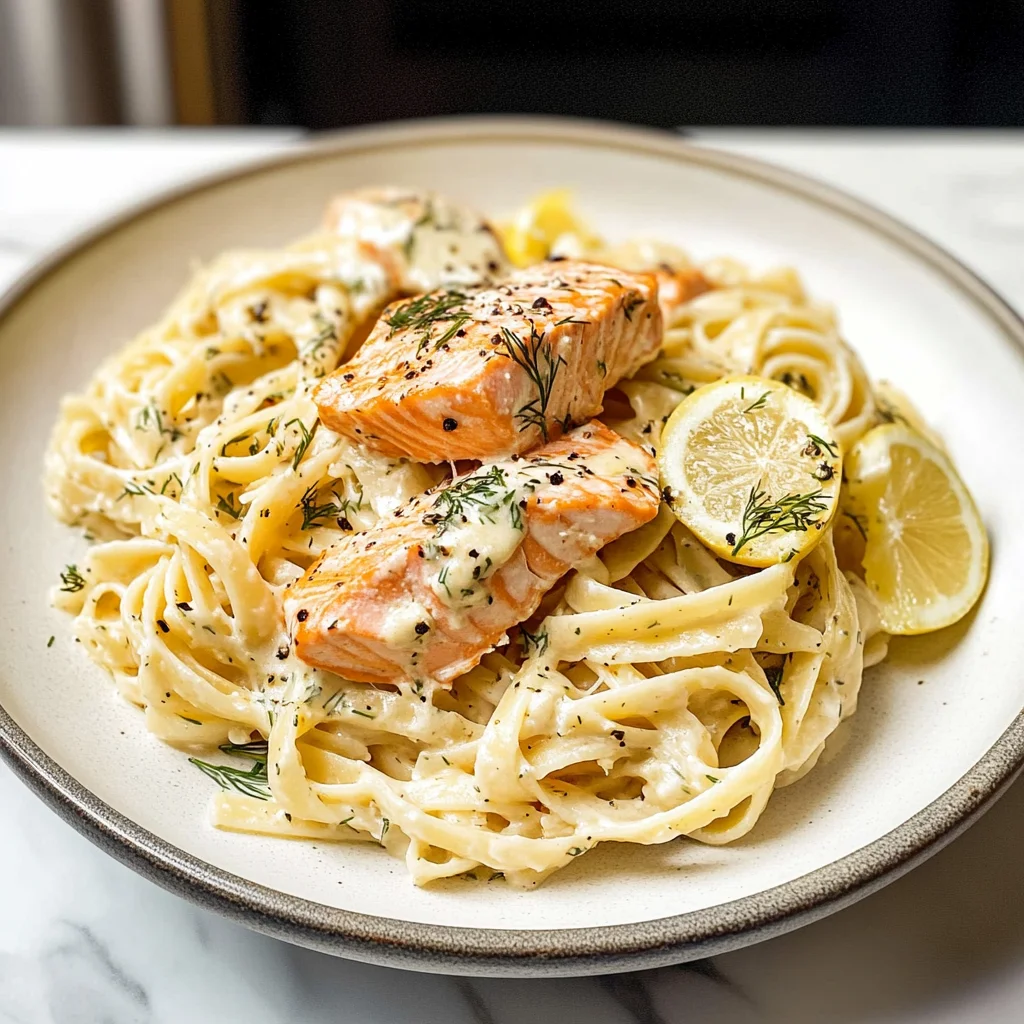
This dish is perfect for nights when you’ve got 30 minutes and a hungry crew waiting. Unlike other salmon pastas, this one skips the fuss of baking or broiling the fish, letting you cook it right in the same pan as your sauce (trust me, it makes cleanup a breeze). Dinner’s sorted.
Why You’ll Love This Lemon Dill Salmon Pasta
- Super Easy Prep: You can whip this up in about 30 minutes, which is perfect for busy weeknights.
- Bright Flavors: The combination of lemon and dill brings a fresh, zesty vibe that really wakes up your taste buds.
- Creamy Texture: The sauce is rich and silky, coating the pasta just right for that melty-gooey goodness we all crave.
- Flexible Ingredients: Swap out salmon for shrimp or even grilled chicken if you’re feeling adventurous (but don’t skip the lemon!).
- Great Leftovers: It reheats well — though the texture changes slightly by day 2, it’s still worth making a big batch.
Lemon Dill Salmon Pasta Ingredients
For the Pasta:
linguine (12 ounces) — Cook linguine just until al dente, or it’ll get mushy when mixed.
salt (1 tablespoon) — Use kosher salt; table salt’s way too salty and can ruin the flavor balance.
For the Salmon:
salmon (4 fillets) — Don’t even think about using farmed salmon; wild’s way fresher and tastier.
olive oil (2 tablespoons) — Grab high-quality extra virgin olive oil like California Olive Ranch for flavor; cheap stuff’s a waste.
salt (1 teaspoon) — Freshly cracked black pepper makes a world of difference; pre-ground’s just dusty.
black pepper (1 teaspoon) — Fresh dill’s a must; dried just won’t give you that vibrant flavor punch.
dill (2 tablespoons) — Use fresh lemon juice, not bottled; that stuff’s got preservatives that ruin the taste.
juice (1 lemon) — Go for heavy cream, not half-and-half; you’ll need the richness for a creamy sauce.
For the Sauce:
heavy cream (1 cup) — Sauté garlic until fragrant, but don’t burn it, or it’ll turn bitter fast.
garlic (1 clove) — Zest the lemon before juicing; it adds a fragrant kick that juice alone can’t match.
lemon zest (1 tablespoon) — Cut lemon slices thin for better presentation and easier squeezing, or they’ll look clunky.
salt (1 teaspoon)
black pepper (1 teaspoon)
For Garnish:
dill (2 tablespoons)
slices (1 lemon)
Full measurements in the recipe card below.
How to Make Lemon Dill Salmon Pasta
1. Boil the Pasta: Bring a large pot of salted water to a boil. Add 12 ounces of linguine and cook until al dente, about 10-12 minutes — you’ll know it’s ready when it’s tender but still has a bit of bite.
2. Cook the Salmon: In a large skillet, heat 2 tablespoons of olive oil over medium heat. Season your 4 fillets with 1 teaspoon each of salt and black pepper. Place the salmon in the skillet and cook for about 4-5 minutes on each side until it flakes easily with a fork.
3. Set Aside Salmon: Remove the salmon from the skillet and set aside on a plate. (Trust me, letting it rest helps keep it juicy.)
4. Make the Sauce: Meanwhile, add 1 clove of minced garlic to that same skillet and sauté for about 1 minute until fragrant — don’t burn it, or it’ll turn bitter fast! Pour in 1 cup of heavy cream and the freshly squeezed juice from your lemon along with its zest, stirring to combine.
5. Thicken It Up: Simmer this mixture for about 3-4 minutes until the sauce thickens slightly — you’ll notice it coats the back of a spoon nicely.
6. Combine Everything: And now, toss in your drained linguine, mixing it well to coat every strand with that creamy goodness. If it’s too thick, add some reserved pasta water little by little until you reach your desired consistency.
7. Add Salmon & Garnish: Flake the cooked salmon into chunks and gently fold them into the pasta, taking care not to break them apart too much. Garnish with fresh dill and thin lemon slices before serving warm!
Exact quantities in the recipe card below.
How to Store Lemon Dill Salmon Pasta
- Room Temperature: Don’t leave it out for more than 2 hours. Use an airtight container if you must, but it’s best to refrigerate it right away.
- Refrigerator: Store in a sealed container for up to 3 days. It may lose some of its creaminess, so don’t be surprised if the sauce thickens a bit.
- Freezer: You can freeze it, but I wouldn’t recommend it since the texture changes. If you do, use freezer-safe containers and try to eat within a month.
- Reheating: Heat gently in a skillet over medium-low heat until warmed through and the sauce is bubbling (you’ll smell that garlic again!). If it’s too thick, add a splash of water or broth to loosen it up.
What to Serve with Lemon Dill Salmon Pasta?

It’s rich and creamy, so I love serving something light and zesty alongside it to balance things out. Here are some pairings that work perfectly:
- Garlic Bread: Crunchy texture and buttery goodness provide a nice contrast to the creaminess of this dish.
- Arugula Salad: The peppery greens add a fresh crunch and acidity that cuts through the richness beautifully.
- Steamed Asparagus: Its bright green color and crisp-tender texture add a pop of color while complementing the salmon nicely.
- Cucumber Salad: Cool, refreshing slices give a textural difference; toss with lemon juice for extra brightness (only takes 10 minutes).
- Roasted Cherry Tomatoes: Sweet and juicy, they bring a burst of flavor that brightens up every bite; just roast for 15 minutes.
- Lemon Wedges: A simple squeeze adds acidity right when you need it, brightening up each forkful without fuss.
- Coleslaw: Creamy or vinegar-based slaw gives great crunch and tang, balancing the heaviness of the sauce nicely.
I’d definitely skip heavy sides; lighter options make this meal feel just right!
Lemon Dill Salmon Pasta Variations
Here’s how to play with this recipe and make it your own!
- Lemon Zest Upgrade: Add 1 tablespoon lemon zest when mixing the sauce for an extra zippy flavor boost.
- Dill Switch-Up: Substitute 1 tablespoon of dill with fresh parsley for a different herb twist.
- Creamy Dream: Stir in an extra ½ cup of heavy cream during the sauce-making for a richer texture.
- Garlic Lovers’ Boost: Add another clove of minced garlic when sautéing for a more robust garlicky aroma.
- Spicy Kick: Mix in ½ teaspoon red pepper flakes with the garlic to add some heat to the sauce.
- Pasta Variation: Use fettuccine instead of linguine for a thicker, chewier bite (same cooking time!).
- Salmon Alternative: Swap salmon for 4 fillets of another fish like trout, adding it to the skillet at the same step.
Make Ahead Options for Lemon Dill Salmon Pasta
I like to prep the pasta and sauce ahead of time, cooking the linguine and making the creamy lemon sauce a day in advance. Just store them separately in airtight containers in the fridge (a glass container works great). The sauce holds up well for about three days, but honestly, the salmon’s best cooked fresh right before serving; it tends to dry out if you refrigerate it. When you’re ready to eat, just heat the sauce gently, toss in the pasta, and flake in that fresh salmon. Trust me, you’ll want to do this — it’s so much easier! Enjoy it hot!
Lemon Dill Salmon Pasta Recipe FAQs
Can I make Lemon Dill Salmon Pasta ahead of time?
You can definitely prep some parts in advance! Cook the pasta and salmon, then store them separately in the fridge. Just keep in mind that reheating might dry things out a bit. When you’re ready to eat, warm everything up gently on the stove and add a splash of cream or reserved pasta water to freshen it up. (Trust me, no one wants dry noodles!)
What can I substitute for heavy cream in this dish?
Honestly, I’d stick with heavy cream if you want that rich, creamy sauce. If you really need a substitute, you could try full-fat Greek yogurt for a lighter option, but it’ll change the flavor and texture a bit. Just remember to add it off the heat to avoid curdling. I wouldn’t recommend low-fat versions here; they just won’t give you the same vibe.
Why did my Lemon Dill Salmon Pasta turn out too salty?
It sounds like either the salmon was seasoned too heavily or your pasta water had too much salt (which can happen with table salt). Make sure you’re using kosher salt for both! You’ll know your linguine’s cooked just right when it’s tender but still has that little bite (al dente). Next time, start with less salt and adjust as needed — it’s easier to add than take away!
Can I use dried dill instead of fresh for this recipe?
You can, but I really wouldn’t recommend it; fresh dill brings such a bright flavor that dried just can’t match. If you’re in a pinch, use about 1 tablespoon of dried dill instead of 2 tablespoons of fresh. Just sprinkle it in during the sauce-making phase so it has time to rehydrate. And remember: less is more—start small and taste as you go!
Final Thoughts on Lemon Dill Salmon Pasta
This Lemon Dill Salmon Pasta is worth making for the creamy sauce that clings to the linguine just right. The heavy cream, fresh dill, and bright lemon juice come together for a flavor explosion that feels fancy without any fuss. Plus, it doesn’t take much time at all—about 30 minutes from start to finish! If you’ve been putting this off, tonight’s the night. I can’t wait to hear how yours turned out, so drop a comment if you added anything special or made a tweak!